 Workplace Amenities · AquaSuite
The Workplace • A How-To Guide
A plain guide to choosing water at work: the real options, how bottleless systems work, and how to match a setup to your team — trade-offs included.
If you look after a workplace, deciding what to put on the water tap comes up more often than you’d expect. Bottled-water delivery, cases of seltzer, a countertop fizz maker, a plumbed-in cooler — each has its fans, and none is right for every office. This is a practical guide to meeting your workplace’s water needs: the questions worth asking, straight answers to each, and an honest account of where our own systems fit.
Why has sparkling water become so popular?
It’s not just a hunch — the numbers back it up. Sparkling and carbonated water is now among the fastest-growing parts of the U.S. packaged-water category, as people move away from sugary soda toward zero-calorie options. The shift is most pronounced among younger adults, who make up a large share of today’s workforce and often reach for sparkling by default. Restaurants alone account for roughly a third of sparkling water consumed, which tells you it’s become an everyday habit rather than an occasional treat.
The simplest explanation: sparkling scratches the itch for a drink with a bit of life to it, without the sugar or caffeine. That’s a big part of why it has shown up in so many break rooms over the last few years — and why it’s worth factoring into your plans even if it isn’t the whole story.
Do people actually prefer sparkling over still?
Plenty do — but it would be overstating it to say everyone does. Preference is personal: some people only ever want cold still water, others want hot for tea, and a fair few won’t touch fizz. So the useful takeaway isn’t “everyone loves sparkling.” It’s that people want choice. A tap that pours still and sparkling (and usually hot and ambient too) serves the whole room instead of betting on a single preference — which is why multi-temperature systems have become the norm rather than sparkling-only ones. When you’re planning, plan for the range of people you have, not the average one.
What are your options for water at work?
There’s no single best answer here; each approach trades off cost, effort, and experience differently. It helps to see them side by side before you narrow down.
- Bottled-water delivery (5-gallon jugs). Familiar and needs no plumbing, but the jugs are heavy to store and lift, the deliveries are a recurring cost, and there’s no sparkling option.
- Canned or bottled seltzer. Easy to start and offers variety, but it’s an ongoing spend, takes up storage, generates a lot of cans, and tends to run out or sit warm.
- Countertop carbonators (SodaStream-style). Inexpensive to try and fun for small teams, but they’re manual, need CO₂ cylinders swapped and regular cleaning, and don’t deliver high volume or ice-cold water.
- Plumbed-in bottleless systems. Pour still, sparkling, hot, and cold on demand and purify on site with no bottles — but they need a nearby water line, a real installation step, and a monthly plan.
Which one makes sense depends on your headcount, your space, your budget, and how much sparkling actually matters to your team. Hold those four in mind as you read on — they’re the same four that settle the decision later.
How does a bottleless sparkling system actually work?
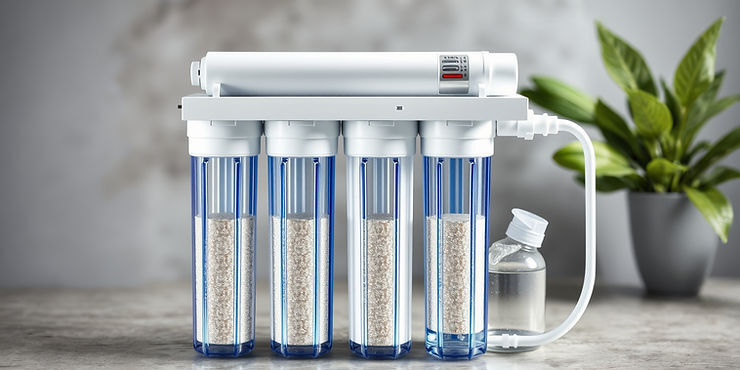
It’s more straightforward than it looks. The unit connects to your building’s water line, then runs the water through several stages of filtration — often including reverse osmosis — to strip out sediment, chlorine, and other contaminants. From there, a chiller (sometimes an ice-bank, which stores cooling capacity so it can serve a rush without warming up) brings it cold, a small carbonator injects CO₂ for the sparkling setting, and a heater handles hot. Most modern units dispense through a touchless sensor and add an antimicrobial dispense point, since the tap is shared by a lot of hands. Follow the path top to bottom:
How to choose the right setup
Once you understand the options, choosing is mostly a matter of asking a few questions in the right order. Each one narrows the field before you ever compare a specific model — and it’s much the same checklist we’d use for choosing an office coffee machine.
- Headcount and traffic. This drives the model size more than anything else — we broke down the same right-sizing question for coffee, and the logic is identical. A small team and a busy 200-person floor need very different machines.
- Which water types you’ll actually use. If nobody drinks sparkling, don’t pay for it; if tea is a ritual, prioritize hot.
- Space and configuration. Countertop units save floor space; freestanding or tower models suit high-traffic areas.
- Plumbing. Bottleless means a water line nearby and an install — a real step worth planning for, not a surprise on the day.
- Ongoing cost. Factor the monthly rental and maintenance plus installation and filter changes, and compare it honestly to what you spend today on jugs or cans.
- Certifications. For schools, healthcare, and government, look for NSF/ANSI and CSA certification before anything else.
Answer those honestly and the shortlist usually writes itself — and sometimes the answer is a simpler, cheaper setup than the one you walked in expecting.
Where the Waterlogic S4 and AquaSuite fit
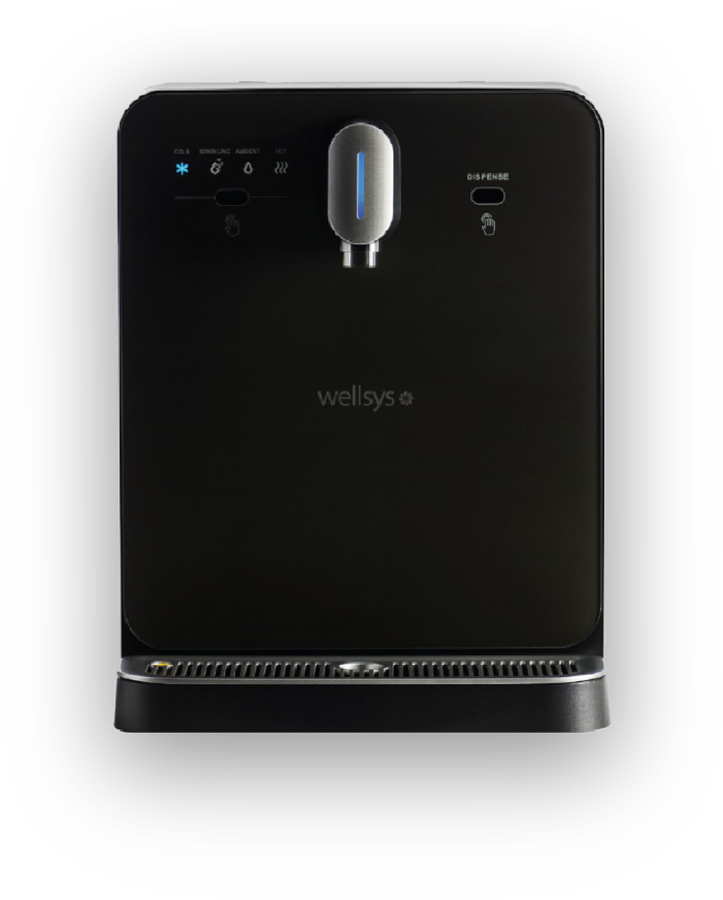
AquaSuite is our fully-managed workplace water program, built on Waterlogic equipment. The Waterlogic S4 is a compact system in that lineup: it pours still, sparkling, ambient, and hot from one touchless tap, uses ice-bank cooling for high-volume ice-cold water, and purifies through a 4-stage reverse-osmosis system. It’s a good match for a team of up to about 25 — and for busier spaces or different needs, there are larger high-volume models and simpler still/hot/cold units in the range. It sits under Aztec’s Workplace Amenities alongside the BaristaSuite coffee program, which runs on the same managed model.
“Fully managed” is worth defining plainly, because it’s easy to gloss over: we deliver and install the unit, service it, and change the filters on a schedule. The monthly plan covers equipment rental and routine maintenance; professional installation and filter changes are billed separately. We’d rather you know that up front than find it in the fine print.
The Waterlogic S4 at a glance
So, is it worth it?
The honest answer is that it depends on how much water your team drinks and what the bottle-and-can routine is costing you in money, storage, and hassle. If people keep leaving the building to buy the sparkling water they like, a shared tap often earns its keep on convenience alone. If they don’t, a simpler setup may be the smarter call — and we’ll tell you so. Meeting your workplace’s water needs isn’t about the fanciest machine; it’s about matching the setup to the people who’ll actually use it.
Talk it through
Weighing your options?
If you're comparing water setups for your workplace, we're glad to help — no pressure. Explore the AquaSuite lineup, or talk it through with our team and we'll help you figure out what suits your space, headcount, and budget.
Explore AquaSuite→ Talk to our team