Modern offices run on technology—but too often, the decisions around that technology are made in silos.
IT teams focus on performance, security, and uptime. Operations teams focus on cost control, space planning, vendor management, and employee experience. When these priorities aren’t aligned, the result is overbuying, underutilization, inconsistent user experiences, and growing frustration on both sides.
A well-aligned hardware strategy bridges that gap. When IT and Operations collaborate on office hardware decisions—from copiers and printers to meeting room technology and communications systems—organizations gain efficiency, reduce costs, and create a better workplace for employees. This article explores why alignment matters, where breakdowns commonly occur, and how businesses can create a smarter, more collaborative approach to hardware strategy.
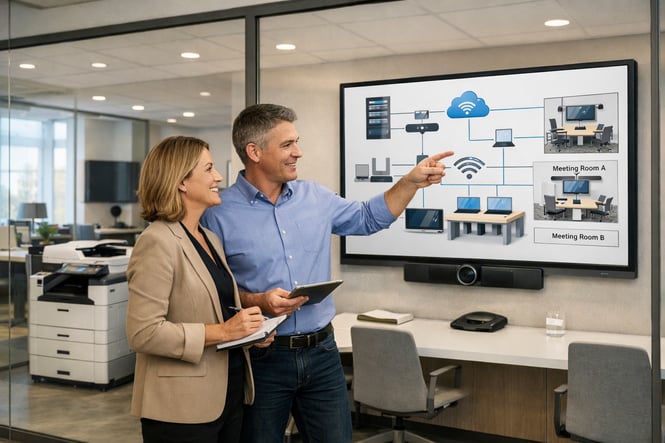
Why Hardware Strategy Is No Longer “Just an IT Decision”
Office hardware used to be relatively straightforward. Printers printed. Phones rang. Conference rooms were rarely used for video. That’s no longer the case. Today’s hardware ecosystem includes:
- Networked copiers and MFPs tied directly into IT infrastructure
- Cloud-connected meeting rooms supporting hybrid work
- VoIP systems replacing traditional phone lines
- Devices that generate data, require security oversight, and impact workflows
Because of this shift, hardware decisions now sit at the intersection of technology, operations, and employee experience. When IT drives decisions alone, the solution may be technically sound but operationally inefficient or overly complex. When Operations drives decisions alone, cost savings may come at the expense of performance, security, or scalability. Alignment ensures hardware supports how the business actually works, not just how it’s purchased.
Common Disconnects Between IT and Operations
Even well-run organizations struggle with alignment. Some of the most common challenges include:
Different Success Metrics
IT is measured on uptime, security, and support tickets. Operations is measured on budget adherence, vendor consolidation, and efficiency. Without shared goals, hardware decisions can pull in opposite directions.
Overbuying “Just in Case”
To avoid future constraints, organizations often purchase more capacity than needed—larger copiers, more advanced meeting systems, or higher-volume hardware than workflows justify. This leads to unnecessary capital expense and underutilized assets.
Reactive Purchasing
When hardware fails or employees complain, decisions are made quickly to “fix the problem.” Without cross-functional input, these purchases may solve a short-term issue while creating long-term inefficiencies.
Lack of Usage Visibility
Operations may not see how hardware is actually used day-to-day. IT may not see how placement, accessibility, or workflow design impacts employee productivity. These disconnects are costly—but they’re also avoidable.
Building a Shared Framework for Hardware Decisions
Alignment starts with structure. Organizations that succeed treat hardware strategy as a joint responsibility, not a handoff.
Start With Business Workflows, Not Products
Instead of asking, “What equipment should we buy?” start with:
- How do teams print, scan, and share documents?
- How often are meeting rooms used, and by how many people?
- Where are bottlenecks slowing employees down?
- What processes are still manual that could be streamlined?
This approach shifts the conversation from specs to outcomes.
Involve Both Teams Early
IT and Operations should be involved at the planning stage, not after a vendor has already been selected. Early collaboration helps:
- Identify true requirements versus nice-to-haves
- Balance performance with cost
- Avoid surprises during implementation
Define “Right-Sizing” Together
Right-sizing means selecting hardware that meets current needs while allowing for reasonable growth—without overbuying. This requires:
- Reviewing actual usage data
- Understanding seasonal or departmental spikes
- Planning for flexibility rather than excess capacity
When IT and Operations agree on what “right-sized” looks like, purchasing decisions become far more effective.
The Role of Hardware in Employee Experience
Hardware strategy isn’t just about infrastructure—it directly affects how employees feel at work. Poorly planned hardware leads to:
- Long walks to shared devices
- Unreliable conference room technology
- Confusing phone systems
- Inconsistent user experiences across locations
Aligned teams consider:
- Ease of use
- Consistency across offices
- Support response time
- Training and onboarding impact
When hardware works the way employees expect it to, productivity improves and support demands decrease.
Industry Trends Driving the Need for Alignment
Several trends are making IT–Operations alignment more critical than ever:
Hybrid Work Is the Default
Meeting rooms now need to support in-person and remote participants equally. This requires coordination between IT (platforms, security) and Operations (room design, scheduling, space usage).
Managed Services Over Ownership
More organizations are moving toward managed IT, print, and communications services. These models require ongoing collaboration to ensure service levels, costs, and performance remain aligned.
Cost Scrutiny Is Increasing
Rising operational costs are forcing businesses to look closely at recurring expenses. Hardware that’s oversized or underutilized is increasingly difficult to justify.
Security Extends to Every Device
Copiers, phones, and meeting room systems are all endpoints. IT needs visibility and control, while Operations needs assurance that security doesn’t compromise usability. These trends reward organizations that plan holistically rather than department by department.
How Aztec Helps IT and Operations Align
At Aztec Office Technology, we work with office-based businesses across the Northeast and United States to bridge the gap between IT and Operations. Our approach is consultative, not transactional. We start by understanding:
- Business size and growth plans
- Existing workflows and pain points
- IT requirements and security considerations
- Operational goals around cost, space, and efficiency
From there, we design right-sized solutions across:
- Office hardware such as copiers, printers, and MFPs
- Managed IT services
- VoIP and communication systems
- Meeting room and collaboration technology
- Bottleless water and ice systems powered by Waterlogic
We focus on:
- Avoiding overbuying
- Standardizing where it makes sense
- Supporting long-term scalability
- Backing every solution with strong service and support
By acting as a strategic partner rather than a product vendor, we help organizations make smarter decisions that work for both IT and Operations.
Turning Alignment Into a Competitive Advantage
When IT and Operations align on hardware strategy, the benefits compound:
- Lower total cost of ownership
- Fewer support issues
- Better employee experience
- Stronger vendor relationships
- Technology that truly supports business goals
Alignment doesn’t require a massive overhaul—just a shift in how decisions are made. The most successful organizations treat hardware as a shared responsibility and work with partners who understand both sides of the equation.
Ready to Rethink Your Hardware Strategy?
If your organization is struggling with mismatched priorities, underutilized equipment, or rising technology costs, it may be time for a more aligned approach. Aztec Office Technology helps IT and Operations teams work together to design smarter, more efficient hardware strategies—tailored to your business, your workflows, and your goals. Contact Aztec today to start a conversation about right-sizing your office technology and creating a more productive workplace.